.png)
What to Look for When Purchasing a Robotic Lawn Mower
Robotic lawn mowers are a game-changer for homeowners who want to maintain their lawns with minimal effort. These intelligent machines can autonomously mow your grass, freeing up your time for other activities, while also keeping your lawn looking immaculate at all times. However, with the wide range of models and features available, choosing the right robotic lawn mower can be challenging. Here's what to look for when purchasing one, ensuring you make an informed decision that fits your specific needs.
1. Lawn Size and Area Coverage
The first factor to consider when buying a robotic lawn mower is the size of your lawn. Not all robotic mowers are designed to handle large yards, so it’s essential to match the mower’s capabilities with the size of your lawn.
Small Lawns (up to 1/4 acre): These mowers are usually compact, budget-friendly, and have fewer advanced features. They’re suitable for lawns of 0.25 acres or less.
Medium Lawns (1/4 to 1/2 acre): These mowers offer a bit more power, and many come with advanced navigation systems and longer battery life to cover larger areas.
Large Lawns (over 1/2 acre): If you have a bigger lawn, look for a robotic mower that can handle up to 1 or 2 acres, with strong battery life and robust navigation systems to handle complex terrains.
Check the specifications of the mower to ensure it is capable of covering your lawn in a single session. Many robotic mowers return to their charging station when they need more power, but having a large lawn may require a mower with longer battery life and a faster recharging time.
2. Battery Life and Charging Time
Battery life is crucial when selecting a robotic lawn mower, as it directly impacts the time it can spend mowing before needing to recharge. For smaller lawns, battery life may not be as much of an issue, but for larger areas, you'll want a mower with a battery that can last for a few hours on a single charge.
Battery Life: Look for mowers with a runtime that can handle your lawn size in one go. A mower designed for medium to large lawns should have a battery life of at least 60 minutes, though many high-end models offer 90 minutes or more.
Charging Time: Check the charging time to ensure it doesn’t take too long for the mower to get back up and running. Most robotic mowers take 1-2 hours to recharge, but some faster-charging models can be back on track in as little as 30 minutes.
3. Navigation and Mapping Technology
Robotic lawn mowers use various methods to navigate and mow efficiently, with some offering more advanced technologies than others. The navigation system determines how the mower will map out and mow your lawn.

Basic Models: Some mowers use random or spiral navigation, meaning they mow in random patterns or in circles until the battery is low. While this is suitable for smaller or simple yards, it may not be the most efficient method for complex lawns with obstacles.
Advanced Models: More expensive mowers tend to have GPS, boundary wire, or camera-based navigation systems, allowing them to map the layout of your lawn and mow it more systematically. GPS-enabled mowers can create a virtual map of your yard, adjusting the mowing pattern to ensure thorough coverage.
Look for a model with smart navigation if you have obstacles like trees, flower beds, or fences, as these systems allow the mower to avoid them and mow efficiently around them.
4. Cutting Performance
The quality of the cut is another essential consideration. While robotic mowers are generally good at giving a neat cut, there can be differences in their cutting mechanisms and results.
Cutting Height Adjustment: Choose a model with adjustable cutting height, so you can tailor the mowing to suit your grass type and desired look. Most mowers have adjustable heights between 1.5 to 4 inches.
Cutting Width: The cutting width affects how much area the mower can cover in one pass. Larger cutting widths mean less time spent mowing, especially in larger lawns. However, wider cutting decks can also make the mower less maneuverable in tight spaces.
Blades and Precision: Some mowers come with more powerful or durable blades for a cleaner cut, especially for thick or dense grass.
Ensure the mower has a sharp, high-quality blade that is easy to replace or maintain. If your lawn is prone to thick growth or rough terrain, choose a model with sturdy blades designed for those conditions.
5. Weather Resistance and Durability
Since your robotic mower will be outside, it’s important to choose one that can withstand various weather conditions. While most models are built to handle light rain, not all are equally resistant to extreme weather.
Weatherproofing: Check if the mower is rated for rain. Most robotic mowers come with a rain sensor that detects wet conditions and directs the mower back to its docking station when the weather gets too bad. This helps to avoid damage and prevent uneven cuts.
Durability: Ensure the mower is built with durable materials, especially if your lawn is uneven or has obstacles that could cause wear and tear over time. Look for models that have high-quality, rust-resistant components.
6. Ease of Setup and Maintenance
You’ll want a robotic lawn mower that’s easy to set up and requires minimal ongoing maintenance.
Installation: Some robotic mowers require the installation of a boundary wire around your lawn, while others use GPS or sensors to detect boundaries. If you’re not keen on DIY tasks, consider a mower with easy-to-follow instructions or even a professional installation option, such as the team at Mac Brothers, who will help with any queries, installation, support and aftercare.
Maintenance: Robotic mowers generally require little maintenance. However, they do need regular blade sharpening, cleaning, and occasionally replacing the battery. Look for models that are easy to maintain, with accessible parts and clear instructions for upkeep.
7. Smart Features and App Control
Many modern robotic lawn mowers come with smart features, allowing you to control them remotely via smartphone apps, voice commands, or even integrate them with home automation systems like Alexa or Google Assistant.
App Features: Look for a mower that offers detailed data, such as mowing schedules, battery status, and maintenance alerts through a smartphone app. You can also control the mower’s schedule, start and stop times, and even track its progress in real-time.
Smart Home Integration: Some high-end models such as the Sunseeker Orion X7 Wireless Robot Lawn Mower (Winner of Best Product of the Year 2024), offer integration with home automation platforms, allowing you to control the mower using voice commands or set up automated routines.
8. Price and Warranty
Lastly, consider the price and warranty. Robotic lawn mowers can range from a few hundred to a few thousand dollars, depending on the features and size of the lawn they are designed to manage.
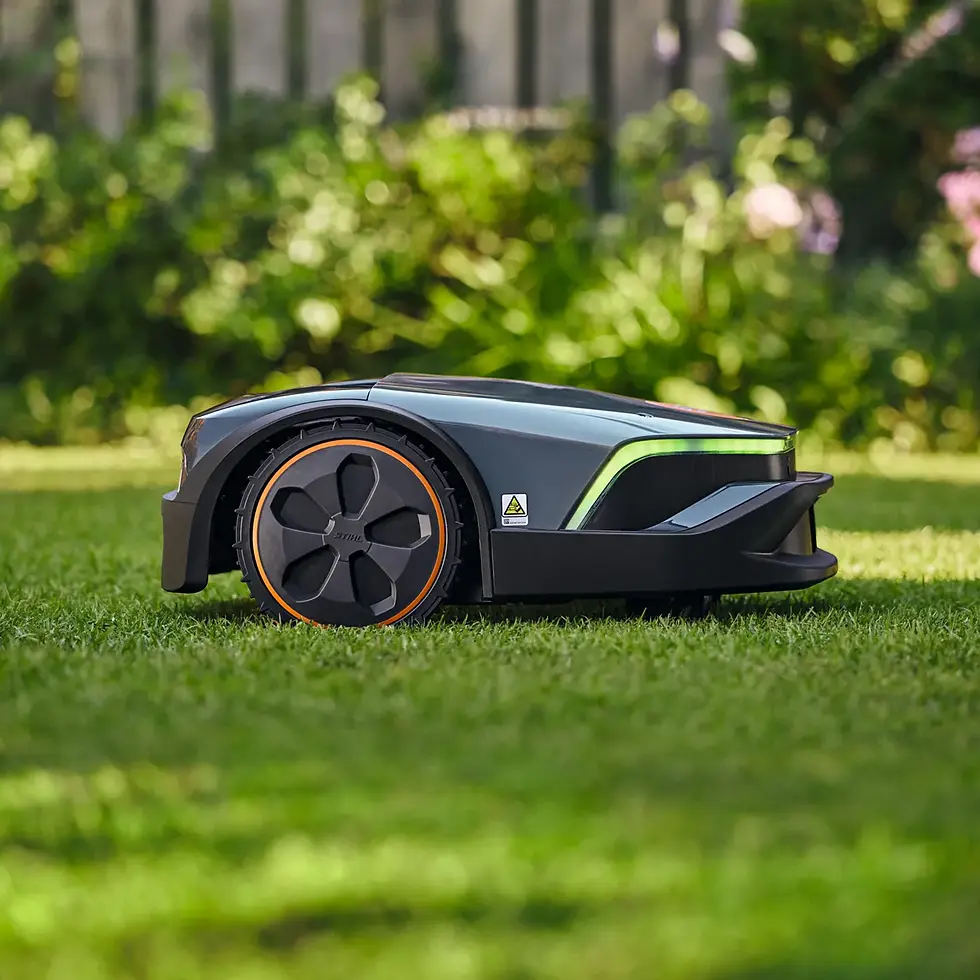
Budget Models: Basic mowers are typically less expensive, but they might lack advanced features like GPS navigation or smart technology.
Premium Models: More expensive mowers offer advanced navigation, better battery life, and smart features. These models often come with a longer warranty for added peace of mind.
Be sure to check the manufacturer’s warranty, as a longer warranty will provide protection in case of any technical issues or breakdowns.
Conclusion
Choosing the right robotic lawn mower depends on your lawn size, terrain, budget, and desired features. By considering factors like battery life, navigation technology, cutting performance, and smart features, you can find a model that meets your needs and keeps your lawn looking great without the hassle of manual mowing. With the right research, a robotic lawn mower can be a worthy investment that saves you time, energy, and effort while giving you a beautiful, well-maintained lawn.

For properties where hands-on control is more important than full autonomy, a Remote control Lawn mower can also be worth considering. Remote operation can provide useful flexibility on uneven or more demanding terrain while still giving the operator control over the mowing process. Overall, comparing coverage, maneuverability, cutting performance, and maintenance requirements is a smart approach when choosing a Lawn mower.